
The hard part of MultiFi wasn't automating the finance inbox. It was making an AI a skeptical finance team would actually trust to touch their money. Here's how I designed that trust, one visible decision at a time.
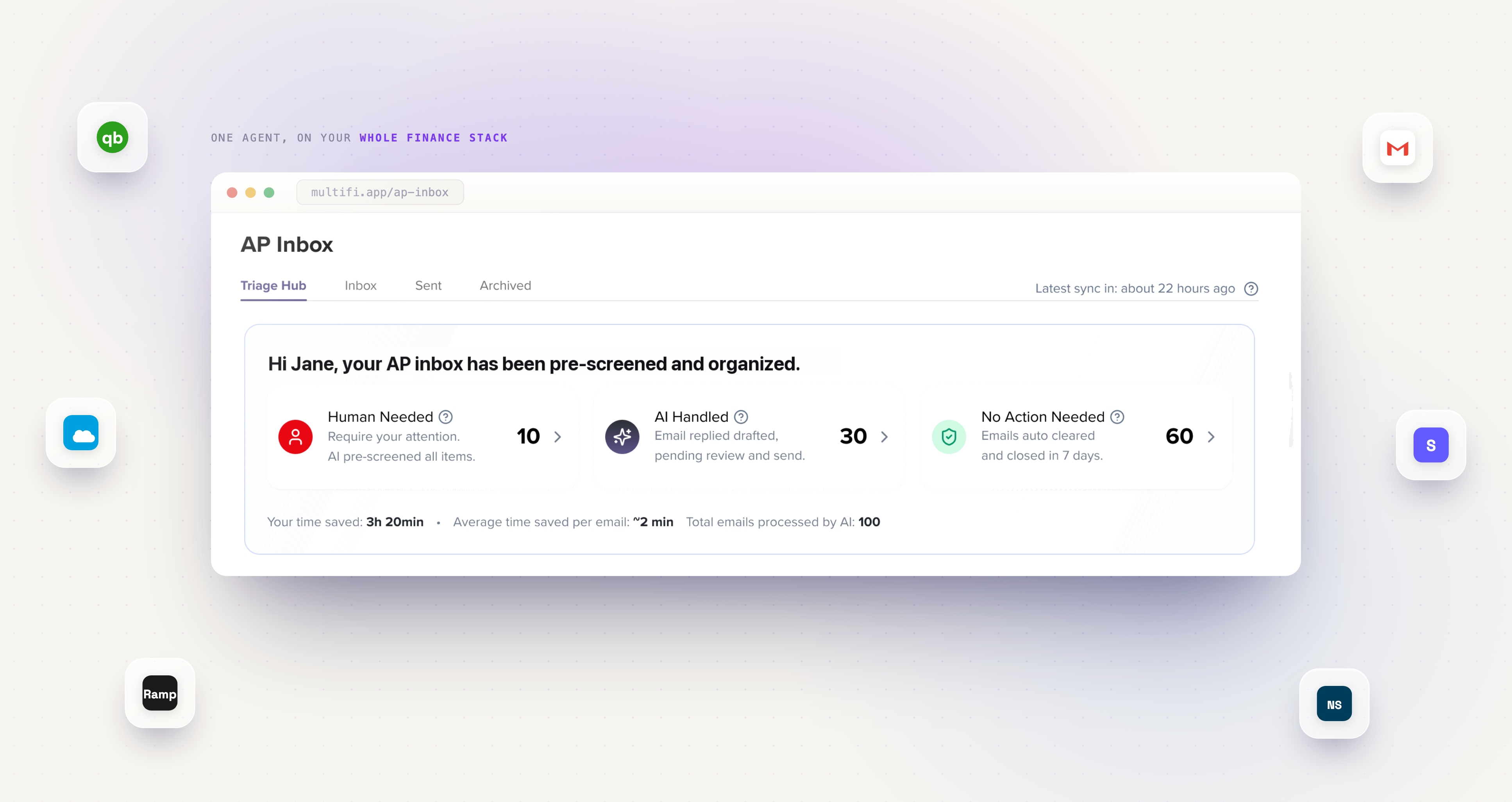
A chatbot's bad answer costs you a reroll. A wrong call here is a bad audit, or a payment chased twice. Helpful wasn't enough. The AI had to be trusted, and trust is earned on screen.
The output is not the product. The user's trust in the output is the product.
The version where I was wrong first, and a user showed me why.
On a screen-share, clearing her inbox fast, one item stopped her cold. She said it word for word:
I just don't know what the system is telling me.
The model had been right. She just couldn't see why, so she couldn't trust it. That one sentence set the whole design: don't make the AI smarter, make it legible.
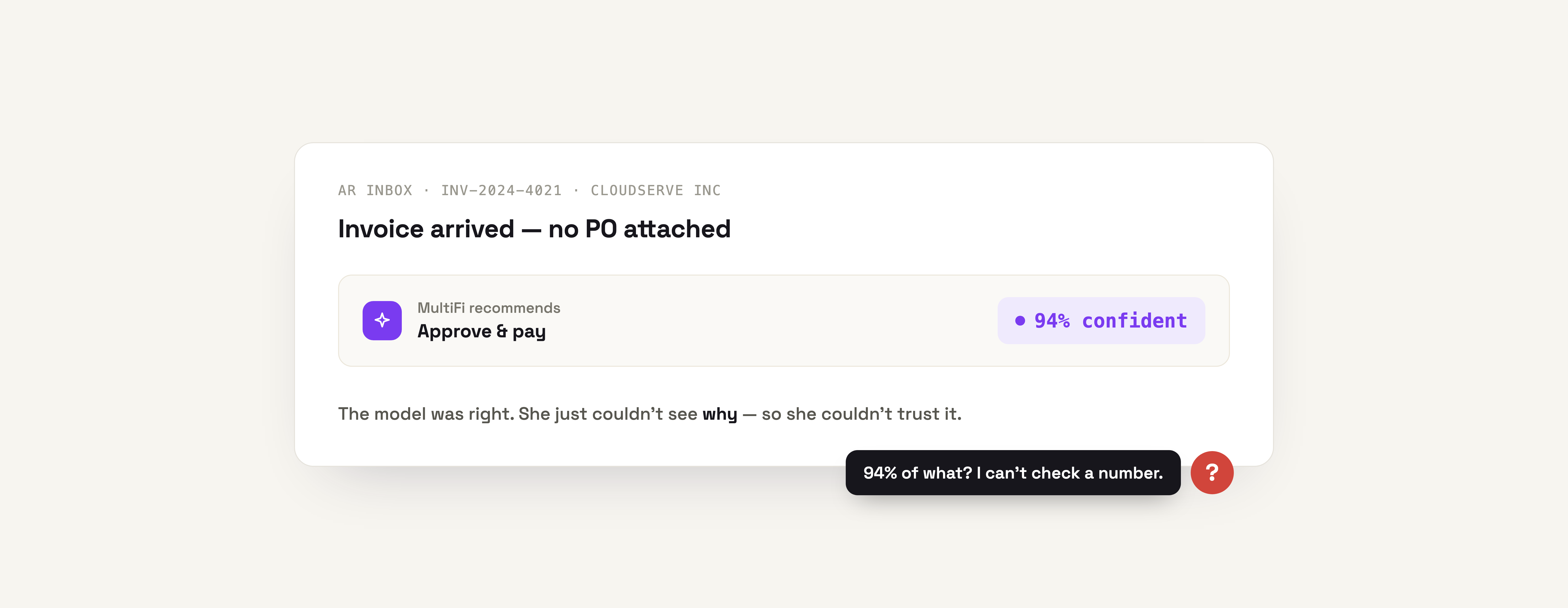
A black box you can't question, or a noise machine that cries wolf until you tune it out. Both end the same way: the human stops trusting the AI. The design had to beat both.
So I sorted the inbox by what you have to do, not by what the model scored. Needs you, handled, or no one, each with a status, a reason, and a next action. You trust it because you can see the whole board at a glance.
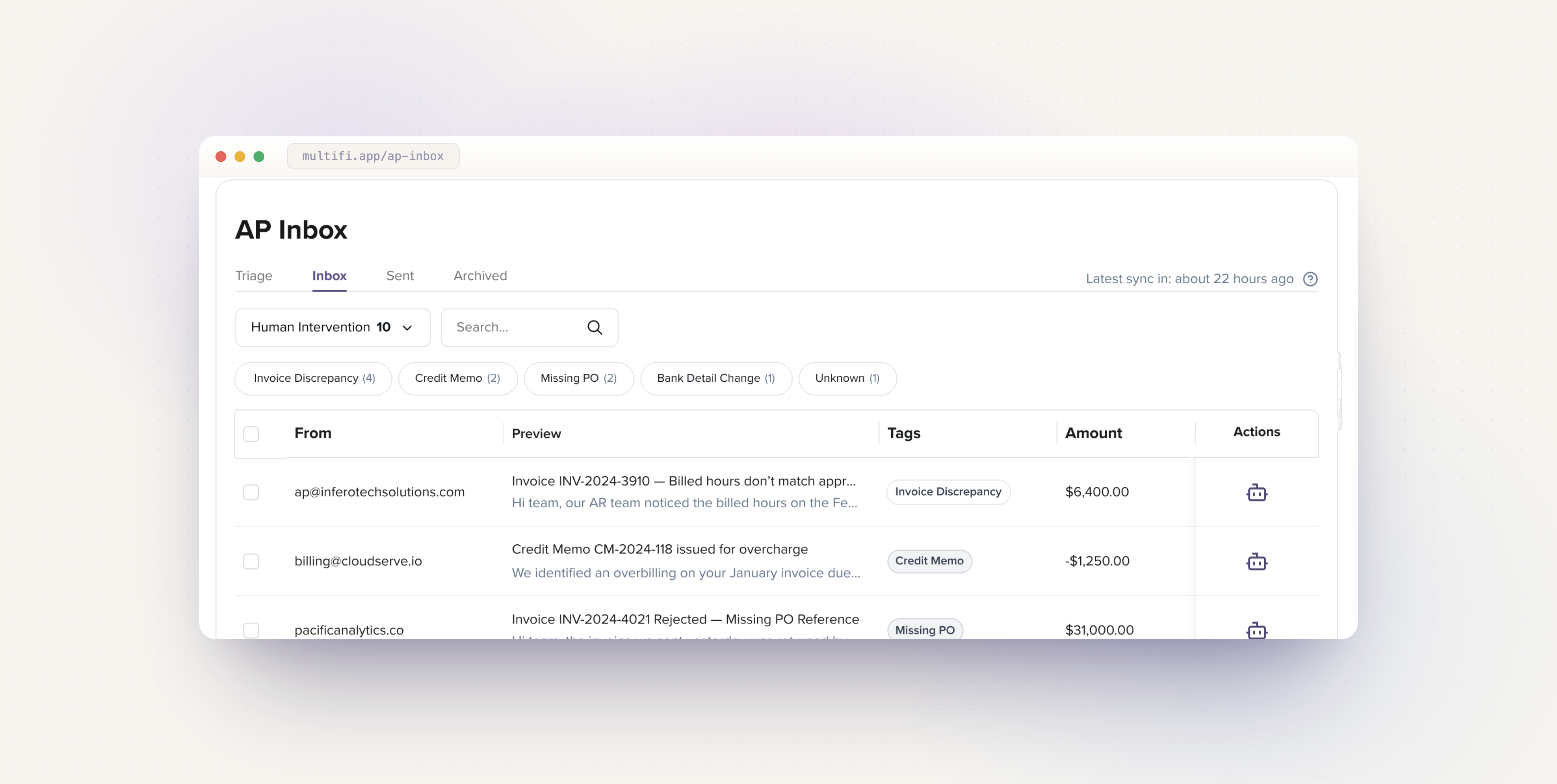
The inbox, pre-sorted by what the human has to do, not by when mail arrived. Tags carry the reason; counts show the load.
For the calls that need a human, I showed the reason and the evidence behind it, never a bare confidence number. A reason can be checked; a number can only be believed. Checkable is what trust is made of.
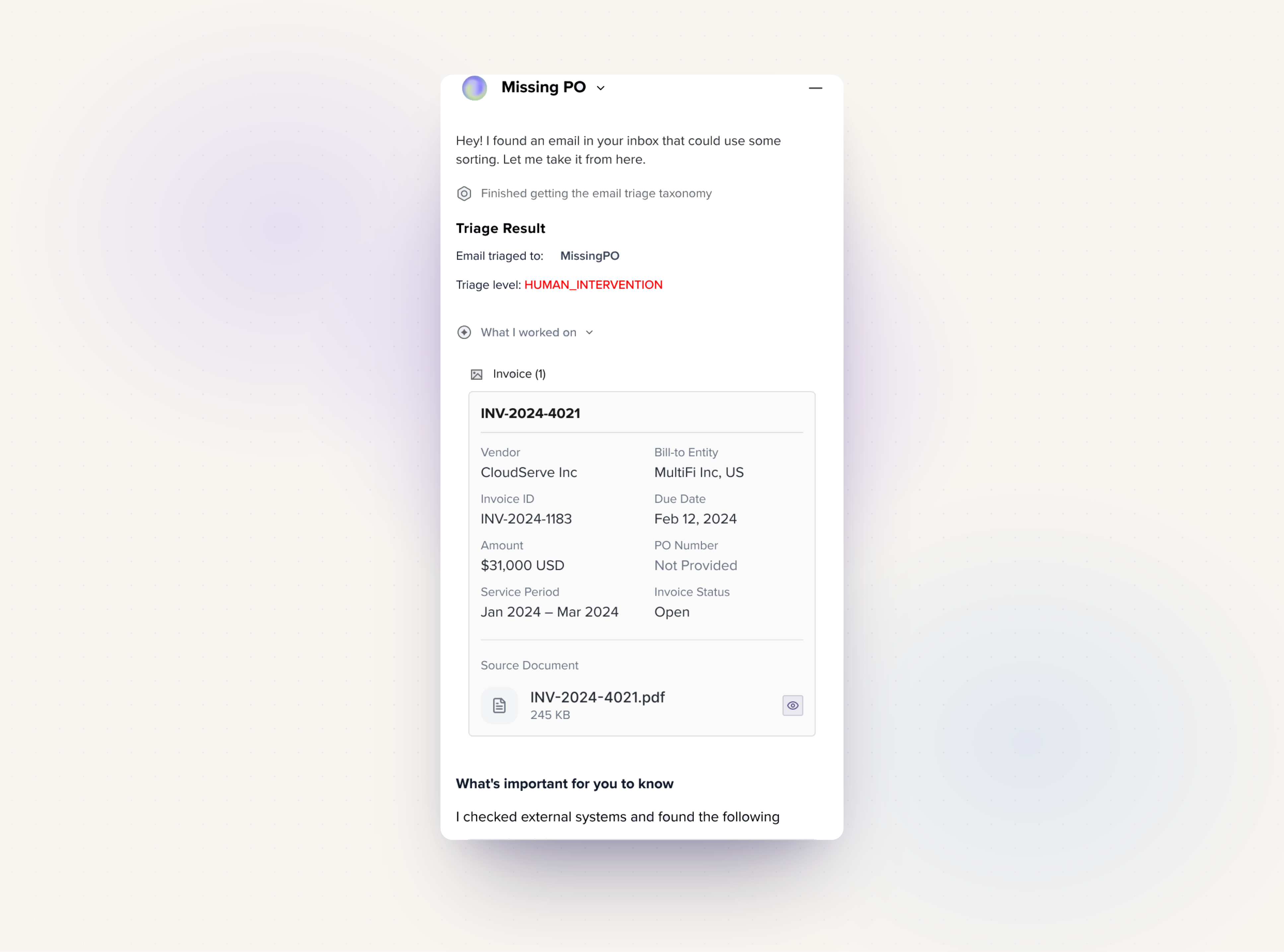
The agent states what it did and why, then drafts the reply. The human reads the reason, edits freely, and holds the send.
Underneath sits one contract: every email in a visible state, uncertainty routed to a human, and nothing committed until you approve. Reversible, on the record, always.
Every email moves through a visible state, in one of three lanes. The AI writes its decisions onto it; the human can catch any of them before it goes out.
State as contract, signal over score, exceptions first. This isn't a fintech trick; it's how any autonomous agent earns the right to act, across AP, payroll, and the rest of the stack.
State as contract
What the model may do alone, and where it must stop and ask.
Signal over score
A reason you can check beats a number you can only believe.
Exceptions first
Surface what's wrong loudly; let confident success stay quiet.
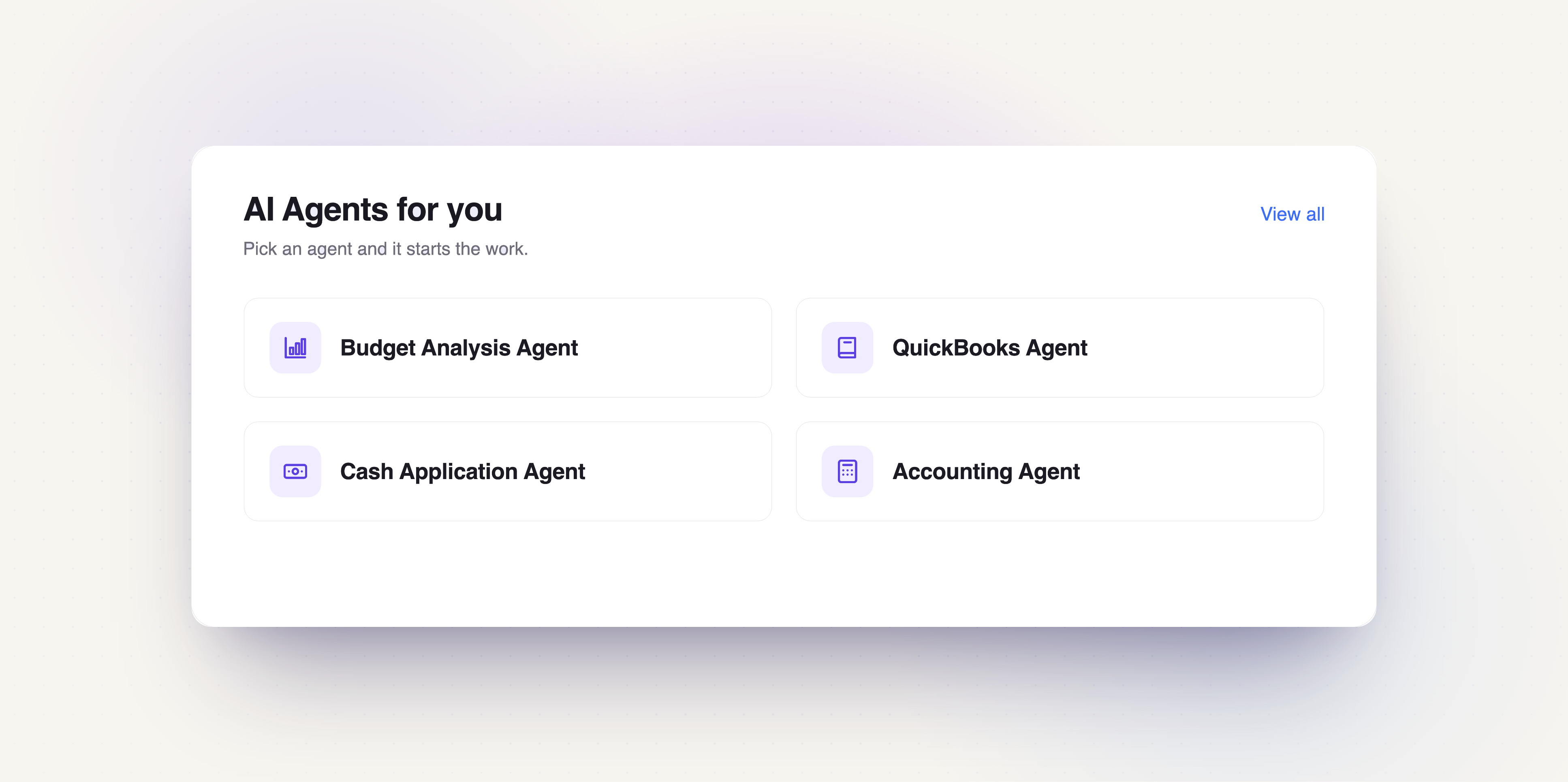
The AR inbox is one agent among many. The same protocol has to hold across AP, payroll, and the rest of the finance stack.
Confidence percentages, sparkle icons, AI badges, decoration. Real trust is built one layer down, in the protocol between what a model may do and what a human must verify.
MultiFi was the first time I designed for this layer. I want the next one to be the layer that powers everyone else's.